Tuesday, January 26, 2016
Political Tonypandy
With the 2016 election ahead, it's easy to get overwhelemed in politcal drama. Through reading Daughter of Time and gaining an understanding of how history is written by those with power, it's evident that politics thrive on Tonypandy. For example, Chris Christie's hurricane sandy relief efforts gained him positive regard in the media and political significance; however, little is ever mentioned about the questionable use of hurricane relief funds by his administration. Before selecting a candidate this election it's imperative that everyone do objective research on their respective candidate; although, this proves difficult as evidenced by Grant's realization of Thomas More's bias. Tonypandy can work for or against anyone in the public spotlight intent on gaining power. This realization helps explain myriad accusations made in the political arena. Since politics is synonymous with the acquisition of power it is clear that Tonypandy plays a major role in the process.

Alans relationship with others
I really enjoyed reading Tey's The Daughter of Time, and I can believe you when you said this is the first book you've read front to back. I felt very intrigued throughout the "investigation" process. What I felt was very interesting to me was how Alan Grant interacted with the people who were taking care of him in the hospital as he was recuperating from his broken leg. When I first started reading I felt like he was in a very bad mood and took it out on "the midget" he called, or one of the nurses that was taking care of him.
If I was a nurse in that hospital I wouldn't have wanted to hear him Complaining about his pains and boredom. I believe once Alan got into the investigation over Richard III he was more openly communicating with those he came into contact with. For instance asking a couple of people of what they thought about Richard III and what they knew about him. I think this new found interest promoted his relationship with the people he was coming into contact with each day as he couldn't move in the hospital. I found it interesting that he asked many of the nurses what they knew about Richard and didn't throw out any assumptions that were made, he kept his mind open to what others peoples opinions were in the beginning. I also feel like he was very Lucky to have those friends pick up books for him from the library and book store as he needed them. I have to give Alan a thumbs up for his effort being on his back like he was. He kept his interest and focus when it wasn't the best situation or environment to be doing an investigation.
If I was a nurse in that hospital I wouldn't have wanted to hear him Complaining about his pains and boredom. I believe once Alan got into the investigation over Richard III he was more openly communicating with those he came into contact with. For instance asking a couple of people of what they thought about Richard III and what they knew about him. I think this new found interest promoted his relationship with the people he was coming into contact with each day as he couldn't move in the hospital. I found it interesting that he asked many of the nurses what they knew about Richard and didn't throw out any assumptions that were made, he kept his mind open to what others peoples opinions were in the beginning. I also feel like he was very Lucky to have those friends pick up books for him from the library and book store as he needed them. I have to give Alan a thumbs up for his effort being on his back like he was. He kept his interest and focus when it wasn't the best situation or environment to be doing an investigation.
History: Is there some fact in the fiction?
On the first day of class, we
discussed what we believed to be the meaning of history and fiction. Many of us
saw a clear distinction between the two. For the most part, the consensus was
history is a series of events that are factual and fiction is a concoction of
the imagination- made up events, if you will. After reading Tey’s, The Daughter of Time, it is clear that
both history and fiction can be one of the same and that it is very difficult
to sway from popular beliefs that have been credited as history. But what is
history? Is it just a series of beliefs that have been adapted over time and
commonly viewed as factual? These are questions that arise from the novel. Even
until this very day Richard III is viewed as the epitome of villainy. Our
protagonist, Alan Grant, begins to question that view because to him, how could
the face in the portrait be a murderer when there is so much sadness and pain
behind his eyes? Grant adopts this notion of topandy; an idea that much of what
is viewed as history is just a myth.
 Now I am no history buff and I
really do not know much about English history, but I question why Richard III
became the quintessential villain of English history. Then I turned to
something that interests me a little more- American history. I googled
“American historical myths” and came across this list of top 10 “myths” that
Americans believe to be fact (here is the link if anyone is interested: http://all-that-is-interesting.com/american-history-myths
). The first myth took me by surprise. It was the story of Paul Revere and how
he had warned American troops that “the British are coming!” According to the
article (and I am sure if I researched it more in depth I would find similar
evidence), the story has been twisted in a way to make Revere appear to be this
grand hero, when in fact he did not utter those words and was accompanied by a
group of people. Despite what actually happened, Americans still views Revere
as the quintessential American patriot. But
this was the point. The story was adapted as a sort of American propaganda to
instill pride and patriotism in the American public. This idea is very similar
to Grant’s notion that Richard III was portrayed as this evil creature to
arouse support for the Tudor monarchy.
I concluded my reading and research
of historical myths questioning history as a whole. Obviously, many events
occurred and are told as they had happened, but it is difficult to know the
truth behind everything that we believe to be fact. Were heroes really heroes?
Were villains really villains? I guess we really will never know. But in the
mean time, history really does make one hell of a story.
"Tonypandy" Nonsense
Throughout the novel, The Daughter of Time, by Josephine Tey, there was a lot of "Tonypandy" nonsense. Tonypandy is a term to describe an event that has either been tampered with or blown out of proportion in a way that the event no longer holds truth to what actually happened. This could be because of political or religious reasons to make such an event hold more meaning to their cause. It was said in the book that Grant starts to believe that tonypandy exists everywhere--even in school books. I have to agree (and it's quite unsettling).
This book's stance on history is very intriguing. I got a sense that the only way to really know what has happened in history is to not just look in writings that have been meant to be history, but to look at personal accounts and things that were not supposed to have any meaning, like a letter or something. Through these accounts, you can see the real truth. An example of this is when Grant and Carradine read a letter from Richard III about Jane Shore and the fact that she was to be married off to another guy. Instead of seeming angry about this, Richard seemed more sad than anything else. He willingly gave his girl away with no problem at all. I found that a little odd. So did Grant. If everyone depicted Richard to be an awful guy, I doubt that he would give up his girl without a fight. The gesture seems nice enough.
Another thing I found interesting was the fact that there are so many ways history can get muddled. Not only can the writings of the time be biased or slightly untrue because of getting second hand information about a certain subject, but it can also be altered for different motives entirely. Especially people in power. Power is a good thing to have back in the day. You could change anything you want just because you can. Yes, there are some limitations, but I feel like if you have connections, like a king, you can get stuff done. When Henry VII became king, he went away with Titulus Regius (the thing that made Elizabeth and the Princes in the tower legitimate/illegitimate) and made it seem like it had never existed. What if he completely destroyed any notion that it existed? That there just happened to be no record of the original and lost forever? People in today's time would never actually know the full truth only because there would be no proof. I've come to believe that that could be the case in history since the beginning of recorded history.
This book has changed how I view history for sure. It makes me feel like nothing can be completely true even when trying real hard to stay truthful. It reminds me of a book I read in high school. It was called, The Things They Carried, by Tim O'Brien. In it, there was a chapter named "How to Tell a True War Story" (or at least I think that's what it was called. Its been a long time so bear with me here). The chapter pretty much said that there was no way to tell a story that is completely true because there will always be a certain detail missed and/or sometimes even an exaggeration of the truth to make the story, or themselves, sound better. I guess you can call this... tonypandy nonsense :)
 |
| I'm actually obsessed with Tangled you guys soooo... |
This book's stance on history is very intriguing. I got a sense that the only way to really know what has happened in history is to not just look in writings that have been meant to be history, but to look at personal accounts and things that were not supposed to have any meaning, like a letter or something. Through these accounts, you can see the real truth. An example of this is when Grant and Carradine read a letter from Richard III about Jane Shore and the fact that she was to be married off to another guy. Instead of seeming angry about this, Richard seemed more sad than anything else. He willingly gave his girl away with no problem at all. I found that a little odd. So did Grant. If everyone depicted Richard to be an awful guy, I doubt that he would give up his girl without a fight. The gesture seems nice enough.
Another thing I found interesting was the fact that there are so many ways history can get muddled. Not only can the writings of the time be biased or slightly untrue because of getting second hand information about a certain subject, but it can also be altered for different motives entirely. Especially people in power. Power is a good thing to have back in the day. You could change anything you want just because you can. Yes, there are some limitations, but I feel like if you have connections, like a king, you can get stuff done. When Henry VII became king, he went away with Titulus Regius (the thing that made Elizabeth and the Princes in the tower legitimate/illegitimate) and made it seem like it had never existed. What if he completely destroyed any notion that it existed? That there just happened to be no record of the original and lost forever? People in today's time would never actually know the full truth only because there would be no proof. I've come to believe that that could be the case in history since the beginning of recorded history.
 |
This book has changed how I view history for sure. It makes me feel like nothing can be completely true even when trying real hard to stay truthful. It reminds me of a book I read in high school. It was called, The Things They Carried, by Tim O'Brien. In it, there was a chapter named "How to Tell a True War Story" (or at least I think that's what it was called. Its been a long time so bear with me here). The chapter pretty much said that there was no way to tell a story that is completely true because there will always be a certain detail missed and/or sometimes even an exaggeration of the truth to make the story, or themselves, sound better. I guess you can call this... tonypandy nonsense :)
Tonypandy or Just a Game of Telephone?
Would you
believe me if I said that this was the first book I’ve read from front to back
in my five semesters of college? Or would most of you consider that to be “tonypandy”?

Personally, I
really enjoyed reading Daughter of Time.
It was a break from the usual dry, boring textbook assignments that never have
any life. Josephine Tey was able to do accomplish a feat that I have never seen
done before and that was making a historical text come to life with a
compelling crime story. A rather tremendous feat when really thought about
because Tey also managed to pose a few interesting questions.
She made, I’d
say 90 percent of the world’s population question their definition of what
history is. In Daughter of Time,
Grant discovers that what is written in the textbooks regarding Richard III is
not actually the truth and therefore is not valid history.
History is an
accurate representation of occurrences from any point that has already
happened. There, my typing of the previous sentence is a form of history. Is it
important history? Not in the slightest but the event actually occurred. No one
framed or covered it up.
What Grant
realizes through his research is that a majority of what is written in the
textbooks ought to be classified as “tonypandy,” or myths regarding events that
actually happened in the past. In all honesty, the best way that I could
possible describe “tonypandy” is that it seems to me to be a form of telephone.

One person has
one recollection of what was said and tells someone, then that person modifies
it slightly so it fits his or her liking, and so forth. “Tonypandy” becomes
history when this game of telephone reaches the point where it has been passed
around so much that no one bothers to check anymore because lazy.

Tey made us all
challenge the beliefs we hold about history. I personally believe that history
is accurate most of the time but not to its fullest extent. Everyone knows that
those who were lucky enough to win are the ones who end up writing the history.
Unfortunately, people do not want to make themselves look bad so they leave out
a few minor (or let’s be honest, HUGE) details regarding the events, yet
normally it is pretty accurate.
In today’s age,
with the emergence of social media, it would appears to be much more difficult
to fake what happened since there are multiple witnesses to almost every event.
History and Tonypandy
Alan Grant's view on history - by Alex Graham
Alan Grant prides himself on his canny ability to decipher faces and the actions attributed to those faces. I believe that according to this book, history is simply another word for the past. When he is in bed, Grant is given many pieces of history (or in other words, many pieces of the past) to keep him entertained. The picture of Richard III that he receives piques his interest and proposes a challenge for his facial deciphering abilities.

I loved how this book wasn't afraid to go against what everyone had thought previously and question what we think we know. It happens all the time in history; ignorant people who think they know what happened write history and then people end up believing their lies.
This book challenged me to really think into every historical document that I read. It challenged me to think about both sides of every story and what the justification could've been for heinous acts throughout history. Take Adolf Hitler, for example. I wasn't alive during his lifetime or WWII, so all I can do is believe what history told me about his life. Although it is not likely, wouldn't it be possible for everyone to have lied to me about the life of Hitler and for him to actually been a good person? The same goes for Richard III; History tells us that he was a murderer, but couldn't he have been a decent guy after all?
The question that I leave with after reading this book is that if tonypandy happened to the history of someone, who would be more ignorant: the person who conjured the false stories and wrote them down as history? or the reader for not doubting what history tells them?
Tonypandy & History
 The novel The Daughter of Time makes myself look back of all the past history classes you have taken and questions it accuracy. History is considered the study of past event, which is clearly depicted in this novel. Throughout the novel the character discuss the topic of “Tonypandy”, which was defined as a dramatic story with not a word of the truth in it. Now looking back on my years of history classes, makes me think does all the lesson from history books have another side that we do not see and have a different meaning?
After
consulting a numerous amount of sources Alan and Carradine came across the conclusion
that Richard was not as ruthless as disclosed in elementary history books and a
lot of tonypandy was the cause of people believing he was a murder and that he ate his
way out of the womb. Tonypandy is created by whoever gets to share their story
first and persuade everyone to believe it and later will become the history
that everyone will know. In order for some people to remember one might exaggerate the truth to make it more entertain. Over four hundred years ago when history was made, when this novel was written, the ruler
of the country had all the control. Therefore, no one dared to question them with out
suffering from consequences. In every kingdom there is a villain; however, we
as an audience do not always know the villain’s story. We only see the villain’s
side if one is willing to take on the challenge to search for the truth and go
against the status quo to defend them. This makes me think of newer Disney movies that
share the side of to villains to give an understanding of why they may act a
certain way. This makes one look past the tonypandy and learn what really happened.
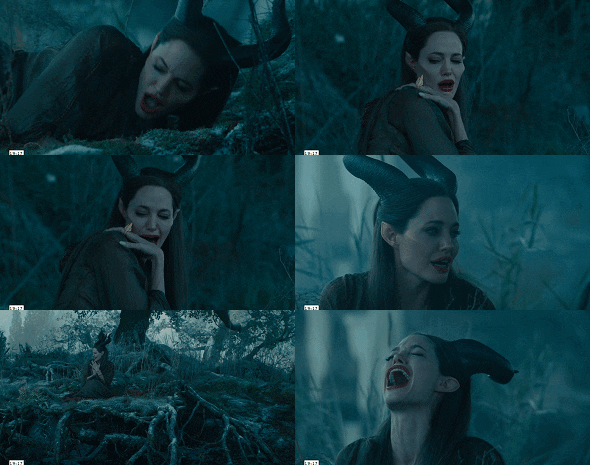
Tonypandy can be considered the history that has lasted through time that people have remembered. Whether true of false history is determined by the one that reports it first and that is carried through generations. Tonypandy may survive the facts, only because of the entertainment.
Subscribe to:
Posts (Atom)